If your dishwasher looks cloudy no matter how often you run it, or your washing machine smells musty within a year of installation, hard water in Klamath County is likely the culprit. The basalt and pumice geology beneath the Klamath Basin loads groundwater with dissolved calcium and magnesium, and that mineral content builds up inside every water-using appliance in your home — often years before manufacturers expect it to fail.
Table of Contents
How Hard Is the Water in Klamath County?
Klamath County water tests at roughly 45 PPM (2.6 grains per gallon) on average, which the USGS classifies as soft to moderately hard. That county-wide average hides a lot of local variation, though — homes on private wells, geothermal-fed systems, or older sections of the water grid frequently test harder than the municipal average because groundwater pulled from deeper basalt and volcanic rock layers picks up more dissolved minerals on its way to the tap. That’s the mineral load your appliances are actually dealing with.
Why Klamath County’s Geology Makes Water Harder Than the Average Reading Suggests
Water here doesn’t fall as rain and run straight into a reservoir. It moves through layers of basalt, pumice, and volcanic rock before it reaches a well or municipal source. As it travels through that rock, it dissolves calcium carbonate and magnesium — the two minerals responsible for hardness. Homes relying on private wells or geothermal water (common throughout the Klamath Falls area) are especially exposed, since that water spends more time in contact with mineral-rich rock than water processed through a municipal treatment plant.
This is also why two houses a few blocks apart can report noticeably different water hardness: one on the city system, one on a private well tapping a different aquifer layer.
How Hard Water in Klamath County Affects Your Home Appliances
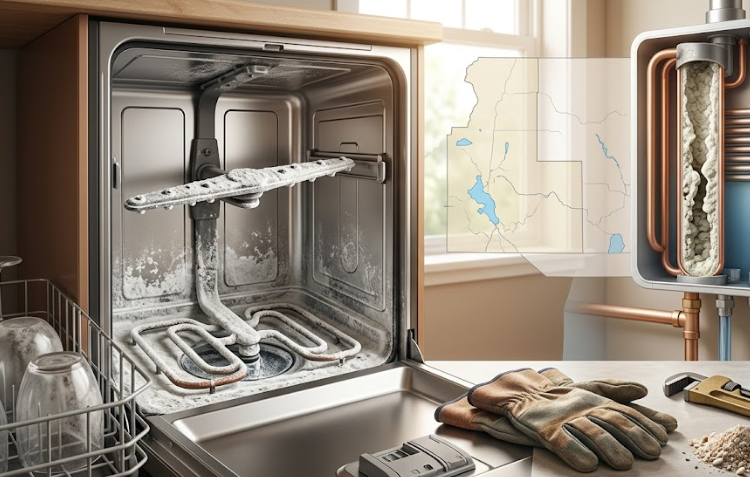
Every appliance that heats, sprays, or cycles water is vulnerable. Dissolved calcium and magnesium don’t stay dissolved forever — they precipitate out as scale the moment water heats up or evaporates, and that scale coats the parts your appliances rely on to work efficiently.
Dishwashers
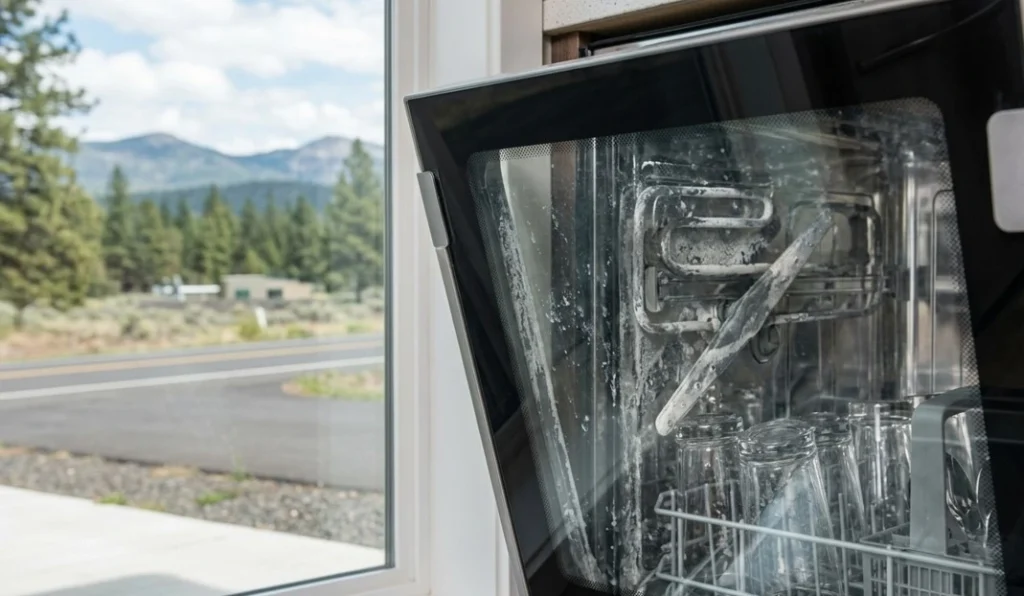
Scale builds up on heating elements, spray arms, and the interior tub. You’ll see cloudy glassware, chalky white film on dark dishes, and a dishwasher that runs longer cycles to compensate for reduced heating efficiency. Left unaddressed, scale can clog spray arm nozzles completely, leaving dishes with visible food residue even after a full cycle. If you’re already noticing this, our guide on refrigerator repair in Klamath Falls covers a related mineral issue — clogged water lines — that follows the same pattern.
Washing Machines
Mineral deposits coat the drum, hoses, and internal valves. Detergent doesn’t fully dissolve in hard water, so soap residue mixes with mineral buildup and creates the musty smell many Klamath County homeowners notice in top-load and front-load machines alike. Scale inside the water inlet valve is also a common reason a washer starts filling slowly or stops filling altogether.
Water Heaters
This is where hard water does the most expensive damage. Sediment and scale settle at the bottom of the tank and coat heating elements, forcing the unit to work harder to reach the same temperature. Over several years, that translates to higher energy bills and a shortened tank lifespan — often failing years ahead of its rated service life.
Coffee Makers and Ice Makers
Smaller appliances show hard water damage fastest because their internal tubing is narrow. A coffee maker with scaled-up lines brews slower and tastes different. Ice makers with mineral buildup in the fill tube produce smaller, cloudier ice or stop producing ice entirely.
Signs Hard Water Is Already Damaging Your Appliances
- White or gray chalky residue around faucets, spray arms, or the dishwasher door gasket
- Glasses and dishes that come out of the dishwasher cloudy or spotted
- Laundry that feels stiff or looks dingy despite using more detergent than the recommended amount
- Reduced water pressure at appliance inlet valves
- A water heater that takes noticeably longer to produce hot water than it did a year or two ago
- Visible scale buildup when you clean or descale a coffee maker
How to Protect Your Appliances from Hard Water Damage
Run a monthly appliance descale. A dishwasher cleaner cycle or a vinegar rinse in a washing machine’s empty cycle removes mineral buildup before it hardens into a harder-to-remove scale layer.
Check and clean water inlet filters. Most washing machines and dishwashers have small mesh filters at the water inlet valve that trap sediment. A clogged filter from mineral buildup is one of the most common reasons Klamath County homeowners call about slow-filling appliances.
Flush your water heater annually. Draining a few gallons from the tank removes settled sediment before it insulates the heating element and forces the unit to overwork.
Consider a whole-home water softener if you’re on a private well. Homes on geothermal or well water typically see the most hardness-related appliance wear, and a softener addresses the mineral load before it ever reaches your appliances. For manufacturer-specific guidance on appliance maintenance in hard water conditions, Whirlpool’s care and maintenance resources outline recommended descaling intervals by model.
Use the correct detergent amount for hard water. Overloading detergent to compensate for poor lathering just adds more residue buildup on top of existing scale.
When to Call a Klamath Falls Appliance Repair Technician
Routine maintenance slows hard water damage, but it doesn’t reverse scale that’s already coated a heating element or clogged a valve. If you’re seeing longer cycle times, unexplained leaks, appliances that no longer heat properly, or a water heater that’s lost more than half its original capacity, it’s time for a professional diagnosis rather than another round of vinegar cycles. Our team provides appliance repair serving the greater Klamath Falls community, with experience specific to the mineral content and geothermal water conditions found throughout Klamath County. If your fridge, washer, or dishwasher is showing these symptoms, our dishwasher repair and washing machine repair pages outline what a typical service call addresses. You may also find our post on how geothermal heating affects home appliances useful, since geothermal systems often correlate with harder water at the tap.
Routine maintenance slows hard water damage, but it doesn’t reverse scale that’s already coated a heating element or clogged a valve. Whether you need local service or are looking for professional assistance in other regions like Appliance Repair Albany NY, calling a technician is key when facing persistent scale buildup. If you’re seeing longer cycle times, unexplained leaks
FAQs
Does Klamath Falls have hard water?
Klamath County averages around 45 PPM (2.6 GPG) county-wide, which falls in the soft-to-moderate range, but homes on private wells or geothermal water sources commonly test harder due to mineral-rich basalt and volcanic rock in the local geology.
How can I tell if my appliance problems are caused by hard water?
Look for chalky white residue around faucets and appliance interiors, cloudy glassware after washing, laundry that feels stiff, and a water heater that’s slower to produce hot water than it used to be.
How often should I descale my dishwasher and washing machine?
Monthly is a reasonable baseline for most Klamath County homes. Homes on well water or geothermal systems may need to descale more frequently since their water tends to carry a heavier mineral load.
Will a water softener actually extend my appliance lifespan?
Yes. Reducing dissolved calcium and magnesium before it reaches your appliances significantly cuts down on scale buildup in heating elements, valves, and spray arms — the main points of hard water failure.
Is hard water damage covered by appliance warranties?
Most manufacturer warranties exclude damage caused by mineral scale buildup, since it’s classified as a maintenance issue rather than a manufacturing defect. That makes preventive descaling and, where needed, water softening worth the investment.
Can hard water damage a water heater permanently?
Yes, if scale accumulates for years without a flush. Severe sediment buildup can crack heating elements and reduce tank capacity permanently, often requiring full replacement rather than repair.