A refrigerator that stops making ice is one of the most common service calls we get, and it’s rarely a reason to panic. Before you book a ice maker repair in Klamath Falls, run through the checks below. Half the time the fix takes five minutes; the other half, you’ll know exactly what to tell the technician so the visit goes faster.
Table of Contents
Quick Answer: Why Is My Ice Maker Not Working?
Most ice makers stop producing ice because of a frozen or clogged water inlet valve, a blocked water filter, an incorrect freezer temperature, or a worn-out ice maker module. In Klamath Falls, cold snaps and mineral-heavy well water make the first two issues especially common. Start with the freezer thermostat and filter before assuming you need a full ice maker repair Klamath Falls appointment — those two checks resolve the majority of calls we get.
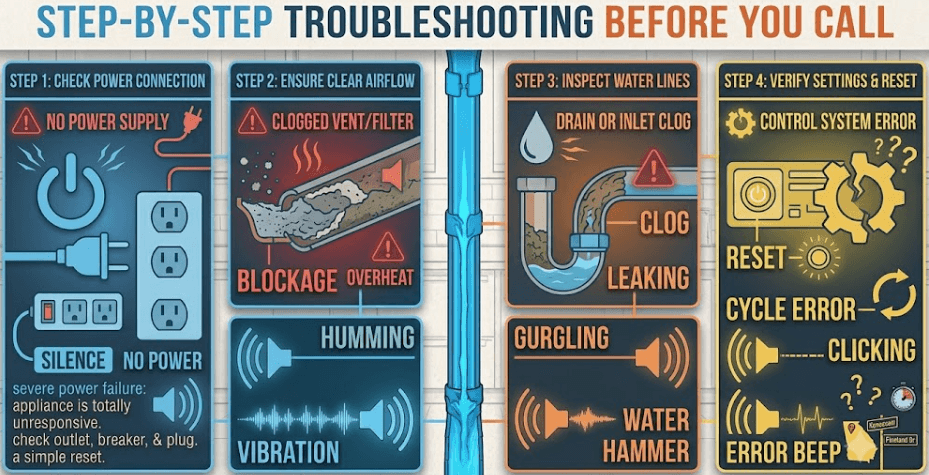
Step-by-Step Troubleshooting Before You Call
1. Check the Freezer Temperature
Ice makers need a freezer temperature between 0°F and 5°F to cycle properly. If your freezer runs warmer than that, the unit may think it already has enough ice, or the water simply won’t freeze fast enough to release from the mold. Give it 24 hours after adjusting the thermostat before checking again — ice production doesn’t restart instantly.
2. Inspect the Water Line and Shutoff Valve
Behind or beneath most refrigerators is a small shutoff valve connected to a 1/4-inch water line. If this valve is partially closed, kinked, or frozen, water won’t reach the ice maker. During Klamath County’s colder months, water lines running along exterior walls or unheated garages can freeze solid. Thaw the line gently with a hairdryer on low heat — never with an open flame — and check for kinks behind the unit.
3. Replace or Clean the Water Filter
A clogged water filter restricts flow enough to stop ice production even when everything else works fine. Most manufacturers recommend replacing the filter every six months, but Klamath Falls’ mineral content can shorten that window. If you can’t remember your last filter change, that’s usually your answer.
4. Listen for the Water Inlet Valve
The water inlet valve is a solenoid that opens briefly during each ice-making cycle. If you don’t hear a faint humming or clicking sound when the ice maker calls for water, the valve itself may have failed, or sediment buildup could be blocking it internally. This part isn’t usually something to test with power still connected — that’s a job for a trained technician.
5. Check for a Jammed Ice Maker Module or Auger Motor
If water is reaching the tray but ice isn’t ejecting, the auger motor or the ice maker module’s gear assembly may be jammed, often by an oddly shaped ice cube or built-up frost. A hard reset — usually holding the test button or power cycling the unit for a few minutes — resolves this in some models but not all.
6. Rule Out a Frozen Evaporator Coil
If the whole freezer section feels warmer than usual and you notice frost buildup around the back panel, the evaporator coil may be icing over due to a failing defrost heater or thermostat. This is a more involved repair and typically points to a bigger issue than the ice maker alone.
When These Fixes Don’t Work
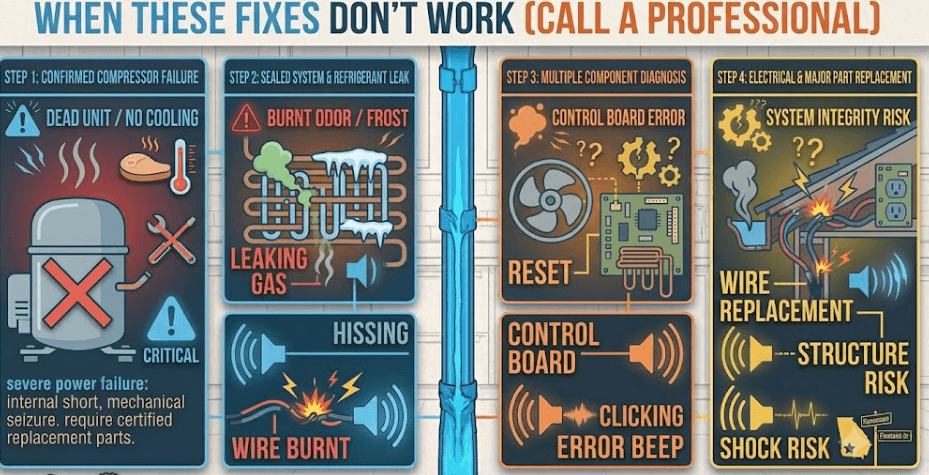
If you’ve checked the temperature, water line, filter, and valve and still have no ice, the problem is likely a failed circuit board, a bad ice maker module, or a faulty compressor affecting overall cooling. These aren’t safe or practical DIY repairs — they involve refrigerant lines, sealed electrical components, or parts that need precise calibration.
At that point, a technician will typically charge a diagnostic fee (commonly in the $110–$119 range locally) that’s applied toward the repair cost once you approve the estimate. Our team offers same-day repair appointments across Klamath Falls, Altamont, Keno, Merrill, and Malin, so you’re not stuck without ice for long. If your fridge is having broader cooling trouble alongside the ice maker issue, our refrigerator repair services in Klamath Falls page covers the full range of problems our certified technicians handle.
A Local Factor Worth Knowing
Klamath Falls sits at a higher elevation than most Oregon cities, and homes here often deal with harder well water than city-supplied systems in the valley. Both factors accelerate mineral buildup inside water lines and inlet valves faster than manufacturer guidelines assume. If your ice maker or refrigerator seems to need filter changes or valve cleanings more often than the manual suggests, that’s likely why — you can read more in our breakdown of how hard water affects appliances in Klamath Falls.
For manufacturer-specific troubleshooting steps, Whirlpool’s official ice maker troubleshooting guide and Samsung’s refrigerator support resources offer model-specific diagrams that can help you identify parts before a service visit.
Serving the Greater Klamath Falls Community
Our technicians work throughout the greater Klamath Falls community, including Downtown, Moore Park, Altamont, Keno, Merrill, and Malin. Whether it’s a simple filter swap or a full ice maker module replacement, our factory-trained team stocks common parts in our service vehicles to fix most issues on the first visit. If winter weather has caused broader appliance trouble beyond the ice maker, our guide on winter appliance problems in Klamath County homes walks through what else to watch for this season.
Frequently Asked Questions
Why does my ice maker make ice slowly instead of not at all?
Slow ice production usually points to a partially clogged water filter, a freezer running slightly too warm, or reduced water pressure from a kinked supply line. It’s less urgent than a complete stoppage but still worth addressing before it worsens.
Can hard water damage my ice maker?
Yes. Mineral deposits from hard water build up inside the water inlet valve and supply line over time, restricting flow and eventually causing failure. Homes on well water in Klamath County tend to see this more often than those on treated municipal supply.
Is it normal for ice cubes to taste or smell off?
This is almost always a filter issue. Old or unused filters allow bacteria and trapped particles to affect taste. Replacing the filter and discarding the first batch or two of ice usually resolves it.
How much does ice maker repair cost in Klamath Falls?
Standard diagnostic fees run $110–$119, with total repair costs generally falling between $100–$350 for common fixes like valve or module replacement. More complex issues, such as a failed circuit board or sealed system problem, can run $400–$800 or more.
Should I unplug my refrigerator to troubleshoot the ice maker?
Briefly, yes — a power cycle of 5–10 minutes can reset a jammed module on some models. Avoid leaving it unplugged for extended periods, since that can cause food safety issues in the fresh food compartment.
When should I stop troubleshooting and call a professional?
If you’ve confirmed proper freezer temperature, a clear water line, and a fresh filter, and you’re still not getting ice, further diagnosis usually requires testing electrical components safely. At that point, calling for appliance repair in Klamath Falls saves time and avoids accidental damage to sealed parts.
Need a hand with your ice maker today? Call (541) 919-6888 for same-day service across Klamath Falls and the surrounding communities.