
Appliance Maintenance Tips for High-Altitude Living in Klamath Falls can help homeowners improve appliance efficiency, reduce unexpected breakdowns, and extend the lifespan of gas ranges, refrigerators, dryers, dishwashers, and water heaters. Understanding how high elevation affects appliance performance allows you to make simple adjustments that keep your home running smoothly year-round.
Klamath Falls sits at roughly 4,100 feet above sea level, and that elevation genuinely changes how several major appliances perform. Gas ranges burn less efficiently in thinner air, ovens often run cooler than their dial setting suggests, water boils at a lower temperature, and dryers can complete cycles too quickly because moisture evaporates faster in the area’s dry climate. None of this means anything is broken. It means your appliances are working in different conditions than they were originally calibrated for, and a few adjustments can keep them running efficiently for years longer.
Why Elevation Changes How Appliances Perform
Air pressure drops as elevation increases, and that single fact touches more of your home than most people expect. At sea level, water boils at 212°F. For roughly every 500-foot increase in elevation, that boiling point drops by about one degree, which means water in a Klamath Falls kitchen boils close to 205°F rather than 212°F.
Gas combustion is affected the same way. Burners depend on a specific ratio of fuel to oxygen, and thinner air means less oxygen is available for that reaction. This is why gas ranges, ovens, and even water heaters manufactured for sea level conditions sometimes need adjusted orifices or regulators to burn cleanly and efficiently once installed above a certain elevation, typically starting around 2,000 to 3,000 feet.
Add in Klamath Falls’ dry climate, and you get a second factor working alongside altitude. Lower humidity speeds up evaporation, which affects how dryers, refrigerators, and even dishwashers perform compared to the same models running in a wetter climate.
Gas Ranges and Ovens
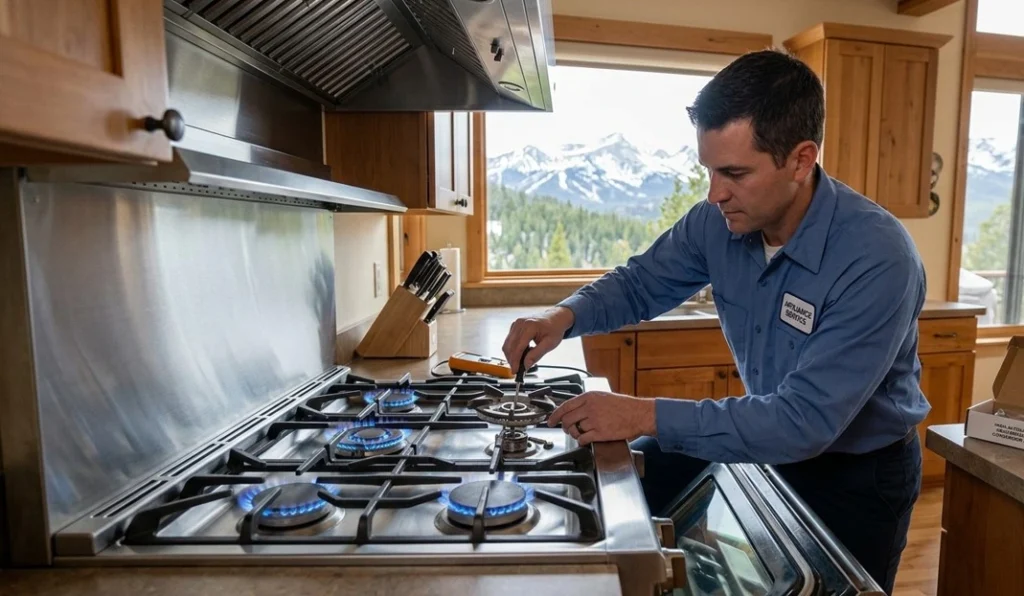
Gas cooktops are usually the most noticeable casualty of elevation. With less oxygen available for combustion, burners can produce weaker flames, take longer to ignite, or burn with a slightly yellow tip instead of a clean blue flame. Ovens face a related issue: because water boils at a lower temperature here, recipes that rely on precise boiling or baking temperatures often need slight adjustments, and some ovens may need a touch more preheat time to reach and hold their set temperature accurately.
Many manufacturers offer high altitude conversion kits for ranges and ovens installed above 2,000 feet, which adjust the gas orifices and airflow to restore proper combustion. If your range has never had this adjustment made and you’ve noticed weak flames or uneven baking results, it’s worth having a technician check whether your unit qualifies for one. Our oven, range, and stove repair team regularly checks burner performance and ignition strength as part of a standard service call.
Refrigerators
Refrigerators don’t rely on combustion, but they do rely on efficient heat exchange, and thinner air affects how well a compressor releases heat, particularly in units placed in a garage or a room with limited airflow around the coils. Combined with Klamath Falls’ cold winters, a refrigerator here is working against two environmental factors at once: thinner air making heat exchange less efficient, and cold ambient temperatures confusing the internal thermostat. If you’re noticing inconsistent cooling or a compressor that seems to run more than it used to, our refrigerator repair page covers the signs worth watching for before a small inefficiency turns into spoiled food.
Dryers
Dryers actually tend to benefit from Klamath Falls’ dry climate in one sense, since moisture evaporates from clothing faster here than in humid regions. The downside is that this can cause some dryers to shut off before clothes are fully dry if the unit’s moisture sensor was calibrated for a more humid environment, or it can lead to overdrying, which is harder on fabric and increases lint production. If your dryer cycles seem shorter than expected or clothes come out drier than the setting suggests, it’s a common elevation- and climate-related quirk rather than a sign of a failing part, though it’s still worth a look if it’s paired with unusual heat output or longer-than-normal cycle times.
Dishwashers
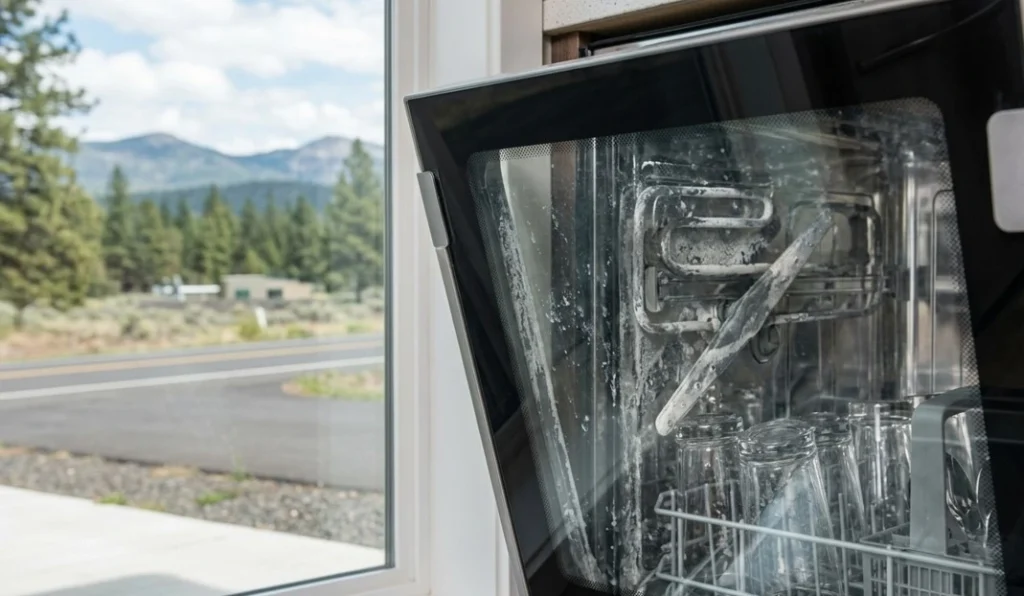
Dishwashers are less directly affected by altitude than cooking appliances, but the lower boiling point of water does mean the water entering your dishwasher reaches its hottest usable temperature slightly sooner, which isn’t a problem on its own. Where homeowners sometimes notice an issue is with detergent performance, since some dishwasher detergents are formulated with sea-level water temperatures in mind and may not dissolve or activate as effectively with marginally cooler water. If you’re seeing spotty glasses or greasy residue despite a full cycle, our dishwasher repair page walks through the most common causes.
Water Heaters
Like gas ranges and ovens, gas-fired water heaters depend on proper combustion, and the same high altitude adjustments that apply to ranges often apply here too. A water heater that’s struggling to maintain temperature, cycling more frequently than expected, or showing a weak pilot light may need its gas orifice or venting adjusted for Klamath Falls’ elevation rather than a full replacement.
Simple Maintenance Steps for High-Altitude Homes
A yearly inspection of gas appliances is one of the most useful things a Klamath Falls homeowner can do, since it catches combustion inefficiencies before they turn into higher gas bills or uneven cooking results. Keeping refrigerator coils clean and ensuring adequate airflow around the unit helps offset the reduced efficiency of heat exchange at this elevation. For gas ranges and ovens, asking a technician whether your specific model qualifies for a high altitude conversion kit can meaningfully improve both safety and performance. Finally, paying attention to dryer cycle times and moisture sensor accuracy helps you catch a miscalibrated sensor before it starts overworking the heating element.
Frequently Asked Questions
At what elevation do appliances start needing high altitude adjustments?
Most manufacturers recommend checking gas appliances for adjustment starting around 2,000 to 3,000 feet, and Klamath Falls sits well above that threshold at roughly 4,100 feet.
Does high altitude shorten the lifespan of appliances?
Not inherently, but appliances that haven’t been properly adjusted for elevation can run less efficiently, which sometimes leads to added strain on components like igniters, burners, and compressors over time.
Why does my oven seem to run cooler than the temperature I set?
Lower air pressure at elevation affects heat retention and boiling points, which can make some ovens perform slightly differently than they would at sea level, even when functioning correctly. A calibration check can confirm whether an adjustment is needed.
Is it worth getting a high altitude conversion kit for an older gas range?
If you’re noticing weak flames, ignition delays, or inconsistent baking results, a conversion kit is often more cost-effective than replacing the unit, provided your specific model has one available.
If you suspect elevation is affecting your appliances’ performance, our technicians can determine whether an adjustment, a part replacement, or routine maintenance is the right next step. Contact us for an honest assessment before assuming a full replacement is necessary.
Sources: USDA Food Safety and Inspection Service, High Altitude Cooking, Sub-Zero, Wolf, and Cove High Altitude Baking Guide, InspectAPedia, High Altitude Gas Equipment Adjustments, KitchenAid Altitude Boiling Point Reference Guide
Pingback: Sub-Zero and Wolf Refrigerators: What Owners Should Know - appliancerepairklamathfalls.com