
Power Outage Appliance Damage in Klamath Falls is a common issue during severe winter storms. Sudden power surges and repeated outages can damage refrigerators, washing machines, dishwashers, ovens, and other appliances. Knowing the warning signs and taking preventive measures can help protect your appliances and reduce costly repairs.
Power outages can damage appliances mainly through the voltage surge that occurs when electricity is restored, along with the wear caused by motors and compressors trying to restart before they’ve fully powered down. Refrigerators, washing machines, dishwashers, and any appliance with a digital control board are the most vulnerable, and Klamath Falls sees this scenario regularly since winter storms are the leading cause of outages served by Pacific Power across Klamath County.
If your appliance stopped responding correctly after the lights came back on, a surge or an interrupted restart cycle is very likely the cause, and there are a few things worth checking before assuming the worst.
Why Klamath Falls Deals With This So Often
Winter storms are the primary driver of power interruptions in this area. Snow accumulation on power lines and falling tree limbs are consistently cited as the leading causes of outages across Klamath County, and outage counts here have reached into the thousands during major winter storm events in recent years. Because these outages are usually weather related rather than a single isolated event, homes often experience power flickering on and off several times before it stabilizes, which is actually one of the more damaging patterns for appliance electronics.
How a Power Outage Actually Damages an Appliance
The Surge When Power Returns
When electricity comes back online after an outage, it doesn’t always return at a clean, stable voltage. A brief spike, sometimes called a surge, can flood the sensitive electronics inside modern appliances, including control boards, timers, and digital displays. Refrigerators, dishwashers, washing machines, and smart ovens all rely on these components, and a strong enough surge can cause them to short circuit or fail entirely, sometimes without any visible sign of damage until the appliance is used again.
Compressor and Motor Strain
Refrigerators are particularly vulnerable when power flickers rapidly during a storm rather than cutting out cleanly. Each time power returns, the compressor attempts to restart, and compressors are generally not designed to restart immediately after shutting down since internal pressure needs a few minutes to equalize first. Repeated rapid restarts during a flickering outage can overheat the motor or damage the start relay, which is the small component responsible for giving the compressor its initial kick to get running.
Interrupted Cycles and Corrupted Programming
Washing machines, dishwashers, and ovens that are mid cycle when the power cuts out can sometimes have their internal programming interrupted. Most units recover fine on their own, but occasionally this results in an appliance that won’t start, gets stuck on a particular step, or throws an error code that wasn’t there before the outage.
Warning Signs Your Appliance Was Affected
- A refrigerator that’s silent, with no compressor hum or fan noise, after power has been restored for more than fifteen minutes
- A loud clicking sound every few minutes without the compressor ever fully starting, which often points to a damaged start relay
- Washing machines or dishwashers that won’t start or are stuck displaying an error code
- Ovens or ranges with a blank or frozen digital display
- Any appliance with a burning smell, visible sparking, or a tripped breaker that won’t reset
If your refrigerator repair call after a storm involves a unit that’s completely silent or clicking without starting, it’s worth having a technician check the control board and start relay before assuming the compressor itself has failed, since those parts are often the actual point of failure.
What to Do During and After an Outage
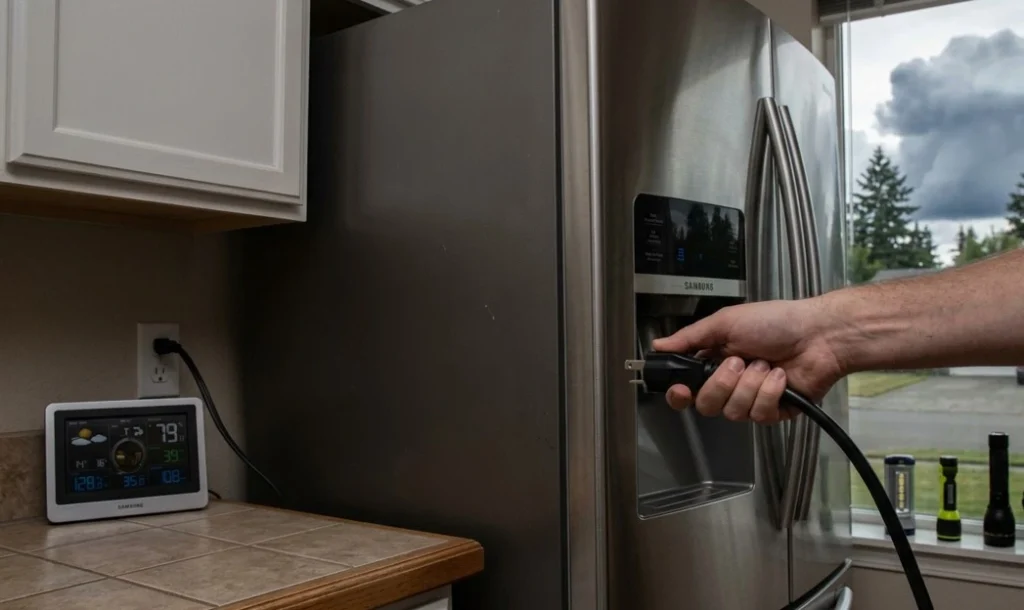
Unplugging sensitive appliances during an active outage, particularly if the power is flickering rather than staying off, is one of the most effective ways to prevent surge damage. Once power is confirmed stable, waiting five to ten minutes before plugging appliances back in gives the compressor time to depressurize and reduces strain on the motor. For refrigerators, keeping the doors closed during the outage itself helps preserve food safety, since a full freezer will typically hold its temperature for about 48 hours and an unopened refrigerator for around four hours.
If you’re expecting a storm and know outages are likely, unplugging refrigerators and freezers proactively, rather than waiting for the outage to happen, is the safer choice for appliances with sensitive electronic control boards.
Surge Protection Worth Considering
A dedicated appliance surge protector is a relatively inexpensive way to reduce risk for major appliances, and a whole home surge protector installed at the electrical panel offers broader protection across every circuit in the house. Given how often winter storms affect this region, either option is a reasonable investment for homeowners who’ve already dealt with a damaged control board or compressor once.
Repair or Replace After Outage Damage
Not every appliance affected by an outage needs to be replaced. A damaged start relay, a blown thermal fuse, or a fried control board are all commonly repairable without replacing the entire unit, provided the compressor or motor itself wasn’t also damaged in the process. If you’re dealing with a washing machine repair or dishwasher repair situation after a storm, a technician can usually determine within one visit whether the fix is a specific part or something more extensive.
Frequently Asked Questions
Should I unplug my refrigerator during a power outage?
Generally, it’s fine to leave it plugged in so it restarts automatically once power returns. However, if the outage involves repeated flickering or you’re expecting severe weather, unplugging it can protect the compressor and control board from surge damage and rapid restart cycling.
How long should I wait before plugging appliances back in after an outage?
Waiting at least five to ten minutes after power is confirmed stable allows compressors to depressurize and reduces the risk of motor strain, particularly for refrigerators and freezers.
Why does my refrigerator click but never start after an outage?
A repeated clicking sound without the compressor engaging is a common sign that the start relay was damaged by a power surge. This is typically a repairable part rather than a sign the whole compressor has failed.
Are power outages common enough in Klamath Falls to justify a surge protector?
Winter storms are a frequent cause of outages across Klamath County, and outages here have affected thousands of customers during a single storm event. A surge protector is a low cost way to reduce the risk of repeat appliance damage.
If a recent outage left an appliance unresponsive or behaving strangely, our technicians can determine whether you’re dealing with a damaged control board, a failed start relay, or something else entirely. Contact us for an honest diagnosis before assuming a full replacement is needed.
Sources: Klamath County Winter Storms Preparedness Guide, Pacific Power Oregon Weather Related Outage Updates, PowerOutage.us Klamath County Tracker, Embraco, How Power Outages Affect Refrigerator Compressors

Pingback: How Long Should a Refrigerator Last? Lifespan by Brand
Pingback: Freezer Frosting Over in Klamath Falls: Causes & Fixes
Pingback: Samsung Ice Maker Freezing Up: Causes and Fixes - appliancerepairklamathfalls.com