
Hard Water Klamath Falls Appliances is an important issue for homeowners because mineral-rich groundwater can cause scale buildup inside washing machines, dishwashers, refrigerators, and other water-using appliances. Understanding how hard water affects your appliances can help you prevent expensive repairs, improve efficiency, and extend appliance lifespan.
If you’ve noticed cloudy glassware, stiff laundry, or a washing machine that seems to be working harder than it used to, hard water is very likely the reason.
Why Klamath Falls Has Hard Water in the First Place
Klamath Falls draws its municipal water entirely from groundwater, primarily through the Conger Well Field, which supplies roughly 80 percent of the water used across the city, according to the City of Klamath Falls Water Division. That water travels through deep wells ranging from 300 to 1,000 feet, moving through volcanic rock, pumice, and mineral-rich soil along the way.
As groundwater moves through these formations, it naturally dissolves calcium and magnesium deposits. The U.S. Geological Survey classifies water hardness on a scale based on these mineral concentrations, and groundwater-dependent communities like Klamath Falls tend to run moderate to hard, while surface water cities elsewhere in Oregon often test softer.
None of this means the water is unsafe. Klamath Falls’ water consistently meets EPA drinking water standards. Hardness is a mineral and efficiency issue, not a health one, but it has a very real effect on the appliances in your home.
How Hard Water Actually Damages Your Appliances
Washing Machines
Calcium and magnesium in hard water bind with detergent instead of rinsing away cleanly. This leaves a chalky film on the wash tub, pump, and internal hoses. Over time, that buildup restricts water flow, strains the motor, and causes valves to fail earlier than they should. You’ll often notice clothes that feel stiff or look dingy even right after a wash cycle. If your washing machine repair history includes more than one pump or valve replacement in a short span, hard water buildup is a common underlying cause.
Dishwashers
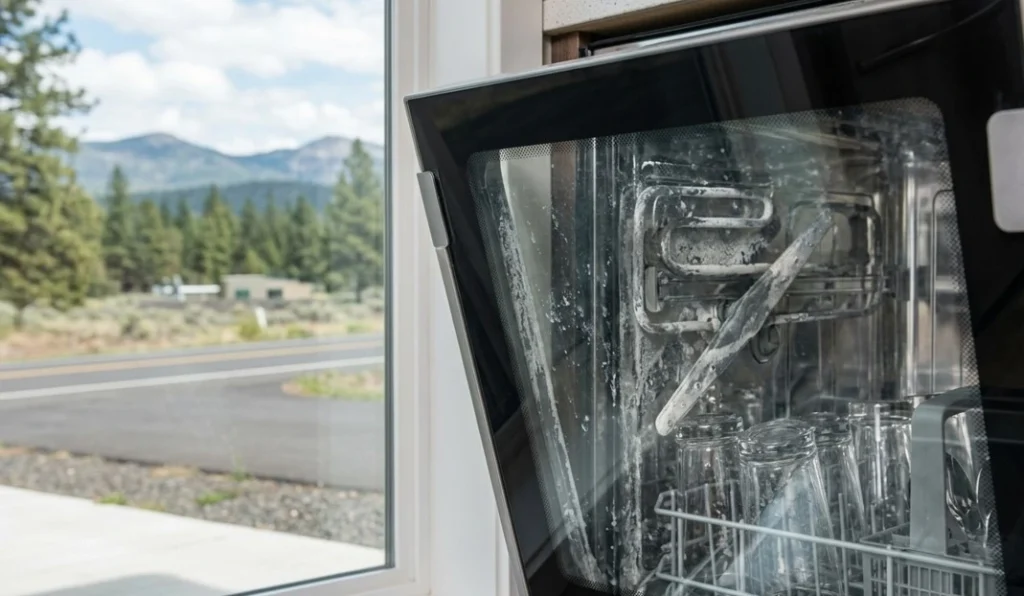
Dishwashers run hot water constantly, which speeds up scale formation. Mineral deposits coat the heating element, clog spray arms, and etch glassware permanently over time. Once glass has been etched by hard water minerals, that cloudiness cannot be cleaned away since the damage is physical, not just residue. A dishwasher repair technician can usually tell within minutes whether spotty dishes or a weak wash cycle are caused by mineral scale or a mechanical issue.
Refrigerators and Ice Makers
This is the appliance most homeowners overlook. Refrigerators with built-in ice makers and water dispensers pull directly from your home’s water supply. Mineral deposits can clog the water inlet valve and the small tubing that feeds the ice maker, leading to slow ice production, strange tasting ice, or a dispenser that stops working entirely. If your refrigerator repair calls keep coming back to the ice maker specifically, scale buildup in the water line is worth checking before replacing the whole assembly.
Ranges, Ovens, and Steam Features
Traditional gas and electric ranges aren’t directly affected by hard water since they don’t use a water supply line. However, newer models with steam clean functions or water reservoirs can develop mineral buildup in those components over time. If you have one of these models, it’s worth asking your oven, range, and stove repair technician to inspect the steam reservoir during routine maintenance.
Warning Signs Hard Water Is Already Damaging Your Appliances
- A white or chalky residue on dishes, glassware, or inside the washing machine drum
- Laundry that feels rough or stiff even with plenty of detergent
- Reduced water pressure from appliance intake valves
- Ice that tastes off or an ice maker that has slowed down significantly
- More frequent repair calls for the same component, like a valve or pump
If you’re seeing two or more of these signs, the mineral buildup has likely moved past the surface and into the internal parts of the appliance.
Repair or Replace? What Klamath Falls Homeowners Should Consider
Scale damage doesn’t always mean an appliance needs to be replaced. In many cases, a technician can clean or replace the specific mineral-damaged part, such as a valve, spray arm, or ice maker line, and extend the appliance’s life by several more years. The general rule of thumb still applies here: if the repair cost is more than half the price of a new unit and the appliance is near the end of its expected lifespan, replacement usually makes more financial sense. Otherwise, a targeted repair is almost always the more affordable option.
Can You Prevent Hard Water Damage Without a Whole Home Softener
A full water softening system is the most permanent fix, according to the Water Quality Association, but it’s not the only option. A few things homeowners in Klamath Falls can do in the meantime include using appliance-safe descaling cleaners every few months, running an empty hot cycle with white vinegar in the washing machine and dishwasher, and keeping appliance water filters clean and replaced on schedule. These steps won’t eliminate hardness, but they slow down mineral accumulation considerably.
Frequently Asked Questions
Is Klamath Falls’ tap water considered hard water?
Klamath Falls draws its water from deep groundwater wells that pass through volcanic rock and mineral-rich soil, which typically results in moderate to hard water. Hardness can vary somewhat depending on which well is supplying your area of the city.
Does hard water void appliance warranties?
Some manufacturers do exclude scale-related damage from warranty coverage, since it’s considered a water quality issue rather than a manufacturing defect. Checking your appliance’s warranty terms for language about water quality or mineral buildup is worth doing if you’re relying on warranty coverage.
How often should appliances be checked for scale buildup in hard water areas?
A yearly inspection is generally enough for most households, though homes with noticeably hard water or heavy appliance use may benefit from checking every six months, especially for dishwashers and washing machines.
If your appliances are showing signs of hard water damage, our technicians can diagnose whether the fix is a simple part replacement or something more involved. Contact us for an upfront estimate before the buildup causes a bigger repair bill.
Pingback: Samsung Refrigerator Ice Maker Freezing Up in Klamath Falls
Pingback: Whirlpool Refrigerator Repair in Klamath Falls
Pingback: How Long Should a Refrigerator Last? Lifespan by Brand
Pingback: Freezer Frosting Over in Klamath Falls: Causes & Fixes