How Klamath Falls’ geothermal heating affects home appliances is a common concern for homeowners using private geothermal wells or older heating systems. The area’s naturally hot, mineral-rich geothermal water can contribute to scale buildup, corrosion, and additional wear on appliances such as dishwashers, washing machines, refrigerators, and water heaters. Understanding how geothermal heating impacts your home’s appliances can help you prevent costly repairs, improve efficiency, and extend the lifespan of your household equipment.
Geothermal heating in Klamath Falls affects home appliances mainly through the mineral rich, high temperature water many older homes draw from private geothermal wells, which can accelerate scale buildup and corrosion in anything connected to that water supply, along with the added wear that comes from heat exchangers and circulation pumps used in geothermally heated homes. This is a genuinely unique situation, since Klamath Falls sits in a Known Geothermal Resource Area and has used geothermal water directly for home heating since the early 1900s, long before the city’s downtown district heating system was ever built.
If you own an older home in Klamath Falls with a private geothermal well feeding your heating system, and you’ve noticed more scale buildup or appliance wear than homes elsewhere in Oregon typically see, the geothermal water itself is very likely part of the reason.
Why Klamath Falls Has This Problem and Most Cities Don’t
Klamath Falls sits above a shallow geothermal reservoir that stretches roughly seven miles in a northwest to southeast direction, and residents have tapped into it for over a century. More than 550 geothermal wells exist throughout the area, historically providing heat for as many as 1,000 homes, most through private closed loop systems rather than the city’s downtown district heating network. The geothermal water pulled from these wells runs significantly hotter than typical groundwater, often in the range of 200 degrees Fahrenheit near the production source, and carries a naturally higher mineral content than the cooler groundwater most Oregon homes rely on.
This matters for appliances because homes using a geothermal well for space heating sometimes have that same well water interacting with domestic plumbing, heat exchangers, or older water heating setups, particularly in homes built before more modern closed loop separation became standard practice.
How Geothermal Water Affects Appliances and Home Systems
Heat Exchangers and Water Heaters
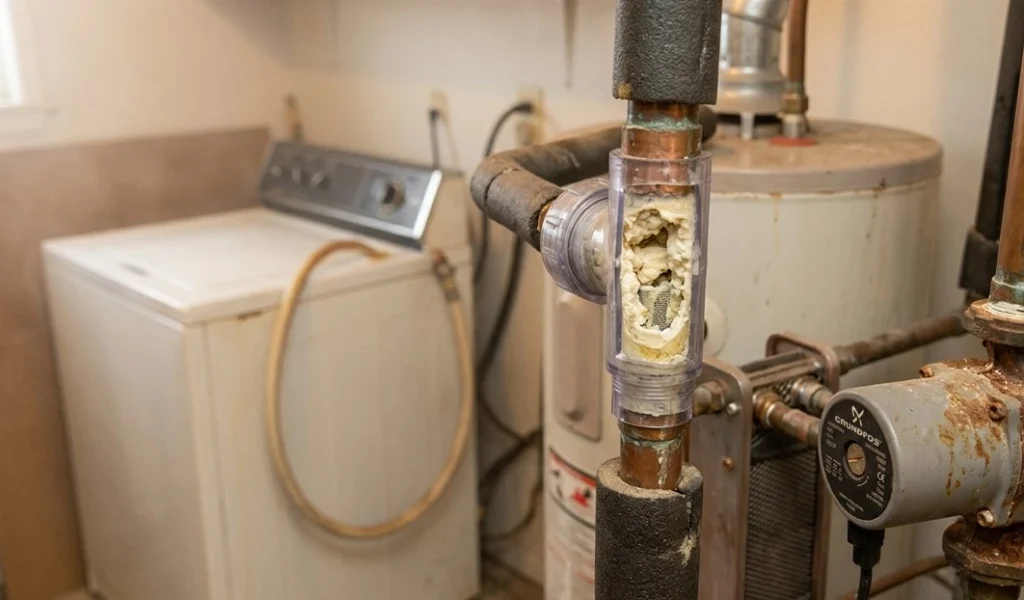
In a properly designed closed loop geothermal heating system, the geothermal fluid stays separate from your home’s domestic water supply, with a heat exchanger transferring warmth between the two without letting them mix directly. This is exactly how the city’s own downtown district system works, using two heat exchangers to transfer heat before the geothermal fluid is reinjected back into the aquifer. In older private residential systems, however, heat exchangers can develop mineral scale over time from the high temperature geothermal fluid on one side, which reduces heating efficiency and can eventually cause the heat exchanger itself to need servicing or replacement.
Washing Machines and Dishwashers in Homes With Older Systems
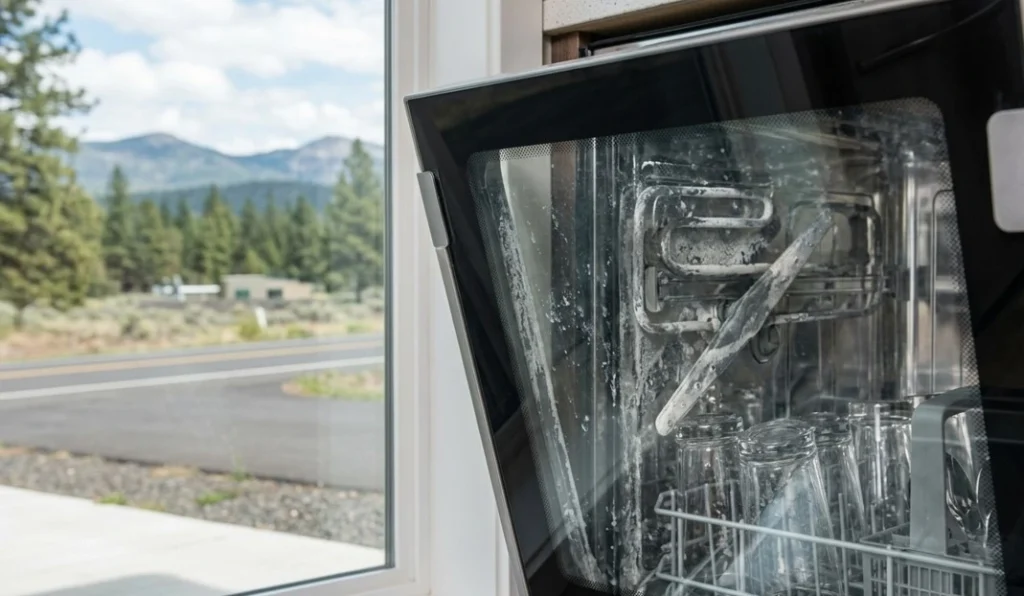
If your home’s plumbing has any cross connection to mineral rich geothermal water, whether through an aging setup or a shared well system, appliances relying on that water supply face accelerated scale buildup compared to homes on standard municipal water. This shows up the same way ordinary hard water damage does: chalky residue inside a washing machine drum, spotty dishes, and premature wear on valves and heating elements. If you’re noticing this kind of buildup and know your home has a geothermal well on the property, it’s worth having a technician check whether domestic water lines are drawing from that source before assuming it’s a standard hard water issue. Our washing machine repair and dishwasher repair pages cover the general warning signs of mineral related wear that apply here as well.
Refrigerators and Ice Makers
Refrigerators themselves aren’t heated by geothermal systems, but in homes where geothermal wells supply some or all of the domestic water, ice makers and water dispensers pulling from that supply can experience the same mineral clogging issues as appliances on hard water, sometimes more severely given the higher mineral content typical of geothermal fluid. A refrigerator repair visit that keeps coming back to a slow or clogged ice maker in one of these homes is worth pairing with a broader look at the property’s water source.
Snowmelt and Auxiliary Systems
Many downtown Klamath Falls properties also use geothermal water for sidewalk and driveway snowmelt systems, a practical application unique to this area given the resource’s availability. While this doesn’t directly affect kitchen or laundry appliances, homes and commercial buildings using multiple applications of the same geothermal source sometimes see broader circulation pump and valve wear across connected systems, which is worth mentioning to a technician if you’re dealing with recurring mechanical issues throughout a property using geothermal water for more than one purpose.
Warning Signs Worth Watching For
- Faster than expected scale buildup on dishes, glassware, or inside washing machine drums
- Reduced heating efficiency in a home using a private geothermal heat exchanger
- Ice makers or water dispensers clogging more frequently than typical hard water would explain
- Corrosion or mineral staining around fixtures connected to a private well system
- Heating performance that has gradually declined over several years without an obvious cause
What Homeowners With Geothermal Systems Can Do
Having your home’s plumbing setup reviewed to confirm whether domestic water is genuinely separated from geothermal fluid is the most important first step, since a properly isolated closed loop system prevents most of these issues entirely. For homes where some mixing does occur, periodic descaling of affected appliances and more frequent inspection of water lines feeding ice makers and dishwashers can catch mineral buildup before it causes a bigger mechanical failure. If your home relies on an older private geothermal well, having the heat exchanger inspected every few years is a reasonable precaution, since scale buildup there affects heating efficiency long before it becomes an obvious appliance problem.
Frequently Asked Questions
Does every home in Klamath Falls use geothermal heating?
No. While the area has a long history of geothermal use and hundreds of private wells exist throughout the city, many homes use standard electric or gas heating with municipal water, unaffected by geothermal mineral content.
Is geothermal water in Klamath Falls hotter than a typical water heater?
Yes, in many cases. Geothermal fluid near the production wells has been measured in the range of 200 to 220 degrees Fahrenheit, significantly hotter than a standard residential water heater, which is why heat exchangers rather than direct mixing are essential in a well designed system.
Can geothermal heating shorten the lifespan of home appliances?
Not directly, since a properly isolated system keeps geothermal fluid separate from appliances entirely. The risk mainly applies to older homes where some cross connection exists between geothermal water and domestic plumbing.
How do I find out if my home’s water is affected by a geothermal well?
Checking with the City of Klamath Falls Geothermal Utility or having a plumber or appliance technician inspect your home’s water source is the most reliable way to confirm whether geothermal fluid interacts with your domestic plumbing.
If you own a home with a geothermal well and you’re seeing appliance wear that doesn’t match typical hard water patterns, our technicians can help determine whether mineral rich geothermal water is playing a role. Contact us for an inspection before scale buildup leads to a bigger repair.
Sources: City of Klamath Falls Geothermal Utility, Wikipedia, Klamath Falls, Oregon, U.S. Department of Energy, Oregon Geothermal Technologies Program, OSTI.GOV, Klamath Falls Geothermal District Heating Systems .