A washing machine leaking water in Klamath Falls almost always traces back to one of six sources: a worn door seal, a cracked drain hose, a loose inlet fitting, a clogged pump filter, too much detergent, or a tub that’s off balance. Some of these are a five-minute fix. Others mean water is pooling behind the drum where you can’t see it, which is how a small leak turns into a warped subfloor. Below is a breakdown of what’s actually failing, why Klamath County’s water and climate make certain leaks more common here, and when it’s time to stop troubleshooting and call a technician.
Table of Contents
Quick Answer: Why Is My Washer Leaking?
Most washing machine leaks in Klamath Falls come from a failed door boot seal on front-load units, a loose or cracked drain hose connection, or mineral buildup from hard water that keeps a valve or seal from closing fully. If the leak shows up only during the spin cycle, suspect the tub seal or bearing. If it leaks the moment you turn on the water supply, the inlet hose or valve is the likely culprit.
Common Causes of a Leaking Washing Machine
1. Worn Door Seal (Front-Load Washers)
The rubber gasket around a front-load door hardens and cracks over time, especially with repeated exposure to detergent residue and mineral deposits. Once it loses its seal, water sprays out during the wash and spin cycles. Check the folds of the gasket for tears, trapped coins, or a buildup of grime that’s preventing a tight close.
2. Cracked or Loose Drain Hose
The drain hose routes wastewater to your standpipe or utility sink. Over years of vibration, the hose clamp loosens or the hose itself develops a hairline crack near the connection point. This kind of leak often puddles slowly and gets blamed on “the floor” before anyone checks behind the machine.
3. Damaged Water Inlet Hose or Valve
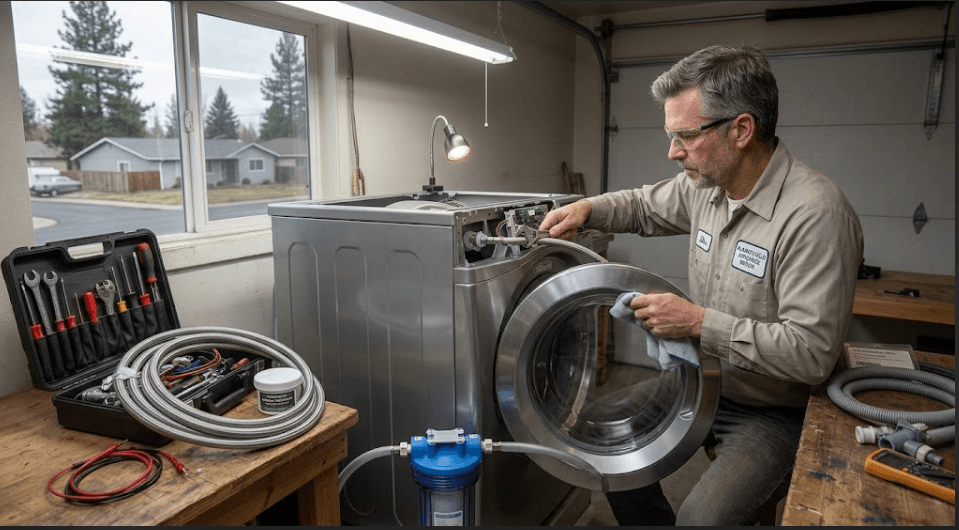
If water leaks the second the machine starts filling, look at the inlet hoses connecting to your wall valves. Rubber hoses degrade and bulge under constant pressure; braided steel hoses last longer but can still fail at the fitting. A cracked inlet valve inside the machine will also drip continuously, even when the washer is off.
4. Clogged Drain Pump Filter
Lint, coins, and small fabric fibers collect in the pump filter. Once it’s blocked, pressure builds and forces water out through the pump housing seams instead of down the drain line. This is one of the most overlooked causes because the filter is hidden behind a small access panel most owners never open.
5. Too Much Detergent or the Wrong Type
Overloading with detergent, or using standard detergent in a high-efficiency (HE) machine, creates excess suds. Those suds can force their way past door seals and out through vents that aren’t designed to handle foam. Switching to HE-rated detergent and cutting the amount in half solves this more often than people expect.
6. Unbalanced Load or Worn Tub Bearing
A washer that leaks specifically during the spin cycle, and shakes violently while doing it, often has an unbalanced load or a worn tub bearing. The imbalance forces water past the tub seal that’s meant to keep it contained. If you hear grinding along with the leak, the bearing has likely failed and needs replacement.
Why Klamath Falls Homes See These Leaks More Often
Klamath Falls sits on a mix of well water and municipal supply with mineral content higher than many parts of Oregon. Hard water accelerates gasket hardening and leaves scale deposits inside inlet valves that prevent them from closing all the way, which is a direct path to a slow drip leak. If your washer is also fighting sediment from an aging well line, filters and hoses clog faster than the manufacturer’s rated lifespan. Homes running on <a href=”https://appliancerepairklamathfalls.com/how-klamath-falls-geothermal-heating-affects-home-appliances/”>geothermal heating in Klamath Falls</a> sometimes see additional strain on appliance components tied to utility rooms with fluctuating ambient humidity, which speeds up rubber seal degradation.
Troubleshooting Checklist Before You Call a Technician
- Unplug the washer and pull it away from the wall.
- Inspect the inlet hoses for bulges, cracks, or corrosion at the fittings.
- Open the door boot (front-load units) and run your hand along the entire gasket for tears.
- Locate the drain pump filter access panel (usually bottom-front) and clear any debris.
- Check that the machine is level; a two-degree tilt is enough to cause spin-cycle leaks.
- Confirm you’re using the correct detergent type and amount for your machine.
- Run a short cycle with no clothes and watch each connection point for the source.
DIY Fix vs. Calling a Professional
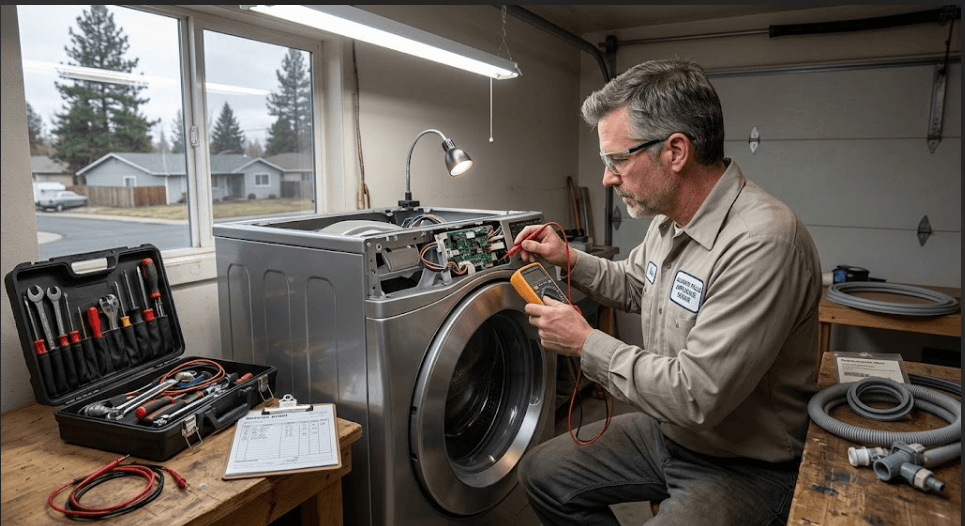
A loose hose clamp or a detergent overdose is something most homeowners can resolve in under 30 minutes. A cracked tub, a failed bearing, or a control board issuing the wrong fill signal requires disassembly most people shouldn’t attempt without training, since reassembling a washer incorrectly can create a bigger leak or an electrical hazard. If the leak keeps returning after you’ve replaced hoses and cleared the filter, the issue is usually internal, and that’s when <a href=”https://appliancerepairklamathfalls.com/washing-machine-repair-klamath-falls/”>washing machine repair in Klamath Falls</a> from a trained technician saves you from a repeat service call.
Typical Repair Costs
| Issue | Typical Cost Range |
|---|---|
| Door seal / gasket replacement | $150 – $300 |
| Drain hose or clamp replacement | $80 – $150 |
| Inlet valve replacement | $120 – $220 |
| Drain pump filter clearing (service call) | $90 – $130 |
| Tub bearing replacement | $250 – $450 |
| Control board diagnosis and repair | $200 – $400 |
Costs vary by brand and model. For a broader look at what drives pricing up or down, see our full <a href=”https://appliancerepairklamathfalls.com/appliance-repair-cost-in-klamath-falls/”>appliance repair cost breakdown for Klamath Falls</a>.
Preventing Future Leaks
Replace rubber inlet hoses with braided stainless steel every 5 years regardless of appearance. Wipe down the door gasket after every few loads to prevent mineral crust from building up. If your home runs on well water, consider a whole-house sediment filter — it protects your washer, dishwasher, and water heater at the same time. For manufacturer-specific maintenance schedules, Whirlpool’s own washer care guide at whirlpool.com outlines cleaning cycles that extend seal life significantly.
If you’re dealing with hard water beyond just the washer, our guide on <a href=”https://appliancerepairklamathfalls.com/hard-water-klamath-falls-appliances/”>hard water and Klamath Falls appliances</a> covers how it affects your dishwasher and water heater too.
A washer that keeps leaking despite basic maintenance is telling you something’s failing internally. <a href=”https://appliancerepairklamathfalls.com/”>Appliance Repair Klamath Falls</a> provides same-day diagnostics for the greater Klamath Falls community, so you’re not left guessing which of six possible causes is actually behind your puddle.
FAQs
Is it safe to keep using a washing machine that’s leaking?
No. Continued use risks water damage to flooring, mold growth behind the unit, and — if the leak is near electrical components — a shock hazard. Unplug the machine and address the leak before running another cycle.
Why does my washer only leak during the spin cycle?
Spin-cycle-only leaks point to an unbalanced load, a worn tub bearing, or a tub seal that can’t hold under the centrifugal force of high-speed spinning. It’s rarely a hose issue if the leak only appears at that stage.
Can hard water actually cause a washing machine to leak?
Yes. Mineral scale builds up inside inlet valves and along door gaskets, preventing a full seal and leaving microscopic gaps water can escape through over time. This is common with Klamath Falls’s water hardness levels.
How much water leaking means it’s an emergency?
Any leak that’s actively pooling on flooring near outlets, or that’s soaking into a subfloor, should be treated urgently. Shut off the water supply valve behind the machine immediately and unplug the unit.
Will homeowner’s insurance cover water damage from a washer leak?
Coverage depends on your policy and whether the leak was sudden versus a long-term, unaddressed problem. Insurers often deny claims tied to neglected maintenance, so document the issue and get it repaired promptly.
How often should I replace my washer’s inlet hoses?
Every 5 years as a preventive measure, even if they look fine. Rubber degrades from the inside before visible cracking appears, and a burst hose while you’re away from home can cause significant flooding.
Is it worth repairing a leaking washer or should I replace it?
If the machine is under 8 years old and the repair cost is under half the price of a new comparable unit, repair is almost always the better value. Beyond that age, factor in the likelihood of a second unrelated failure soon after.