
If your fridge suddenly sounds like it’s running a small factory in your kitchen, that’s not something to shrug off. Loud noises are one of the clearest early warning signs that a component is failing before a full breakdown happens. This guide breaks down exactly what each sound means, what it typically costs to fix, and when it’s time to call for refrigerator repair in Klamath Falls instead of waiting it out.
Table of Contents
Refrigerator Repair in Klamath Falls: Quick Answer
Why is my refrigerator so loud all of a sudden? In most cases, a loud refrigerator points to one of four things: a failing compressor, a worn evaporator fan motor, a condenser fan blocked by dust, or ice buildup hitting the fan blades. Buzzing and humming usually mean electrical or compressor strain. Clicking on and off repeatedly often signals a start relay or capacitor problem. Rattling is commonly loose parts or debris, and squealing is almost always a fan motor bearing wearing out. A same-day repair can typically resolve fan and relay issues; compressor failures involve a higher repair cost and sometimes replacement.
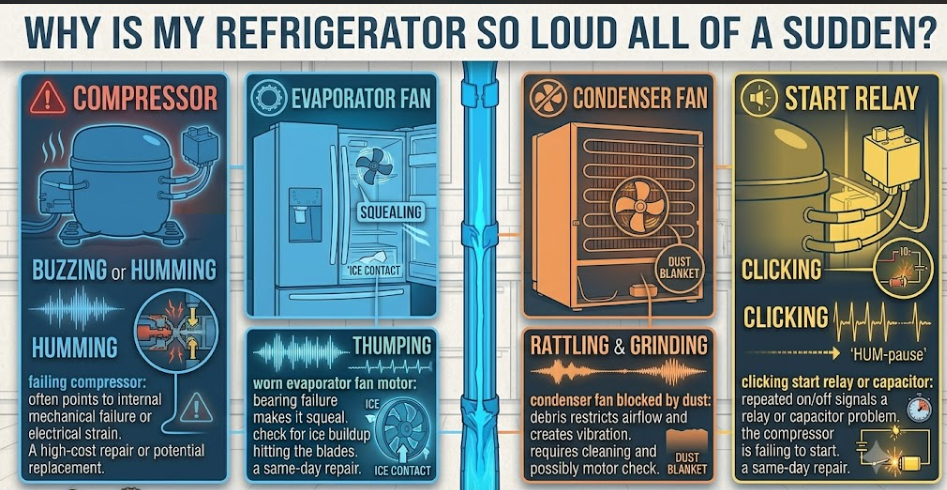
Match the Noise to the Problem
Different sounds point to different failing parts. Here’s how to narrow it down before a technician even arrives:
Loud Humming or Buzzing
A low, constant hum is normal — refrigerators run compressors continuously. But a hum that’s noticeably louder than usual, especially paired with the fridge working harder to stay cold, often means the faulty compressor is under strain or the compressor mounts have degraded. Check that the unit isn’t pushed flush against the wall, since vibration against drywall amplifies the sound.
Clicking or Ticking Repeatedly
If your fridge clicks every few minutes and the compressor doesn’t fully start, the start relay or overload protector is likely failing. Left unaddressed, this stresses the compressor further and can shorten its lifespan significantly.
Rattling or Vibrating
Rattling is usually mechanical, not electrical. Loose compressor mounting bolts, a shifted drip pan, or items on top of the fridge vibrating against the wall are common culprits. This is one of the cheaper fixes — often resolved without opening the circuit board housing at all.
Squealing or Screeching
High-pitched squealing almost always traces back to a worn evaporator fan motor or condenser fan bearing. These motors run for years but eventually seize or wear unevenly, and the noise gets progressively worse until the fan stops entirely.
Popping or Cracking
Occasional popping, especially after a defrost cycle, is normal — it’s plastic components expanding and contracting with temperature shifts. This is one sound you generally don’t need to worry about.
Local Factor: Klamath Falls’ Dry Climate and Cold Winters
Klamath Falls sits in a high desert basin with hot, dry summers and genuinely cold winters, and both extremes put extra strain on a refrigerator’s compressor and fan system. Low humidity means dust builds up on condenser coils faster than in wetter climates, which is one of the most common reasons for a sudden increase in fan noise. In winter, homes with a garage-adjacent kitchen or an unheated utility room can see compressor oil thicken overnight, leading to a louder, longer startup hum on cold mornings. If your noise issue tracks with the season, it’s often (though not always) load-related rather than a hard failure — but it’s still worth a diagnostic check before it turns into a full breakdown and a fridge full of spoiled food.
What a Repair Typically Costs
- Diagnostic fee: Most local visits start with a standard diagnostic fee, often credited toward the repair if you move forward.
- Fan motor replacement: A moderate repair, usually completed same-day since motors are common stock parts.
- Start relay or capacitor: One of the more affordable fixes and a frequent cause of clicking noises.
- Compressor replacement: The most expensive repair category. Many technicians will discuss whether replacement is more cost-effective than repair for older units, since compressor sealed-system work is labor-intensive.
DIY Checks Before You Call
- Pull the fridge out and check for anything vibrating against the wall or floor.
- Clear dust from the condenser coils at the back or bottom — a clogged coil forces the compressor and fan to work harder and louder, and dust buildup is especially common in Klamath Falls’ dry air.
- Check the freezer for visible ice buildup near the back panel, which can cause the evaporator fan to grind against ice.
- Confirm the fridge is level; an uneven unit can cause rattling that has nothing to do with internal components.
If the noise persists after these checks, it’s mechanical or electrical rather than positional, and that’s the point to bring in a technician rather than risk further wear on the compressor.
For manufacturer-specific troubleshooting steps, Whirlpool’s official refrigerator noise support guide is a solid reference for cross-checking symptoms against your specific model. The ENERGY STAR refrigerator maintenance guidelines also cover coil cleaning and airflow best practices that extend fan and compressor life.
When to Call a Professional
Call sooner rather than later if:
- The noise is new and getting louder week over week
- The fridge isn’t cooling as effectively as before
- You smell anything burning or notice the noise paired with tripped breakers
- The compressor cycles on and off rapidly without settling
Waiting on any of these usually turns a same-day repair into a full compressor or unit replacement. Our team provides professional Klamath Falls appliance repair, serving the greater Klamath Falls community with same-day diagnostic visits, so a noisy fridge doesn’t turn into a spoiled-food emergency.
If you’re also dealing with other appliance issues in the house, our Klamath Falls appliance repair services page covers washers, dryers, ovens, and dishwashers, or you can head straight to our refrigerator repair Klamath Falls service page to book a visit.

Frequently Asked Questions
Is it normal for a refrigerator to get louder as it ages?
Some increase in noise is normal as fan bearings and compressor mounts wear down over years of use. A sudden, sharp increase in volume is not normal and usually signals a specific part failing rather than general aging.
Can a loud refrigerator still be cooling properly?
Yes, for a while. Fan and relay issues often show up as noise before they show up as reduced cooling. That’s exactly why catching the noise early is worth it — you can often fix the smaller part before the compressor is affected.
Should I unplug my refrigerator if it’s making a loud noise?
Only if you notice burning smells, sparking, or the noise is paired with visible smoke. Otherwise, keep it running (to avoid losing food) and schedule a diagnostic visit as soon as possible.
How much does it cost to fix a noisy refrigerator?
It depends on the part. Fan motors and start relays are generally on the lower end of the repair cost scale, while compressor issues run significantly higher. A diagnostic visit will give you an exact quote before any repair work starts.
Why does my refrigerator only make noise at night?
Ambient house noise is lower at night, so sounds that are present all day become more noticeable. It’s rarely the case that the fridge is only loud at night — it’s more likely you’re just hearing it more clearly.
Can dust cause my refrigerator to be loud?
Yes, and it’s a bigger factor in Klamath Falls than in more humid climates. Dust-clogged condenser coils are one of the most common and easiest-to-fix causes of increased noise and reduced cooling efficiency. Vacuuming the coils every 6 months helps prevent this.
Is a rattling noise dangerous?
Rattling itself isn’t dangerous, but it usually means something is loose, which can wear down other components over time if left unaddressed.
How long do refrigerator compressors usually last?
Most compressors last 10-15 years under normal use. Klamath Falls’ cold winters and dry, dusty summers can shorten that slightly if the unit isn’t cleaned and maintained regularly.
Pingback: Sub-Zero and Wolf refrigerator repair in Klamath Falls
Pingback: Appliance Repair in Klamath Falls: Complete Guide
Pingback: 7 Signs You Need Commercial Refrigeration Repair in Klamath Falls
Pingback: Freezer Repair in Klamath Falls: Chest vs. Upright